Showing posts with label narcissism. Show all posts

Monday, March 18, 2013

Psychology of the beautiful woman - Part 3


In recent times I have come under some criticism about my posts on the beautiful woman. It has been alleged that I have been too critical and demonizing them. After reading again what I have written I think there is truth to these comments that I have been too harsh.

I did at one point say that I was generalizing with my comments but I perhaps should have also said that most beautiful women will adjust relatively normally to the odd situation in which they find themselves. Any exceptional person is abnormal in the statistical sense of the word. Because of some quality they have, they are out side the normal range where most people fit.
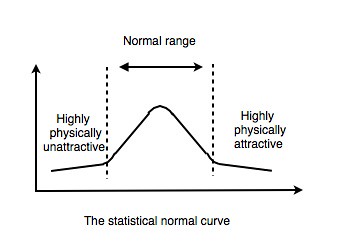
Statistical normal curve

The normal curve. The beautiful and the very unattractive are not in the normal range as the vast majority of people are. 


As they are outside the normal range they will have to deal with circumstances which most other people do not. This is what I have been attempting to explain with my posts. I think I have achieved this but at the same time I have not highlighted that many beautiful women are probably nice people people with good psychological adjustment. They have been able to successfully negotiate the psychological pitfalls which their physical appearance brings them and develop psychologically in a reasonably normal way. 

It is true I have been focussing on the negative psychological fallout that their appearance can bring them. The reasons for doing this are obvious in that this is the purpose of the writing in the first place BUT I do also want to say that in my view most will avoid any serious psychological damage that could result, such as significant narcissism.
Strong

This of course applies to any person who has some exceptional quality whether that be academic ability, power, wealth, singing ability or being the fastest runner in the world. However I would say that the beautiful woman has more difficult circumstances than these others. In the other examples just cited they can easily hide their special attribute. No one would know they have it unless they are told or the person goes out of her way to show it, like running a race. 

However the beautiful woman cannot do this as her exceptional ability is ‘in you face’ each and every day she ventures out into the social world. She could dress in a very unattractive way but in essence she would have to hide herself like this for people to not see. 
TOPSHOTS-AFGHANISTAN-VOTE-WOMEN

It could therefore be said that her special ability is going to have more of an impact on her psychology than other types of special ability. Also her specialness is there from day one and especially from early adolescence whereas one does not know they have exceptional academic ability until the end of school or one does not know they are the fastest runner until they have competed at the olympics.

However I would like to say to these women that I apologize if I have treated them too harshly. My motive was to look at this group who fall out side the normal range and examine what may be the psychological consequences of that. Naturally there will tend to be more interest in the negative psychological consequences as that is what psychologists and psychotherapists are required to deal with when they work. Clients don’t seek out psychotherapists to work on what is positive and healthy.

Graffiti

Saturday, June 16, 2012

The psychology of the beautiful woman - Part 2


Some time ago I wrote an article on life positions and concluded that there were 7 life positions instead of the customary 4. However in that article I asserted that human do not naturally see OKness in others. They have to be forced to see others as OK as it is not a natural thing for them to do. Whilst this may seem a somewhat machiavellian view of human nature it is one that I hold to and I may add could be argued to be consistent with Freud’s view of the natural state of human psychology.
This view follows the idea of primary narcissism as was presented by Freud. Every child is born a narcissist or as Freud would put it, with a form of self love that he called primary narcissism. On a side note this makes the narcissistic personality type unique amongst all the other personality types such as the paranoid, schizoid, OC, hysteric and so forth. People as they develop will grow into these personality types. They develop over time as a result of the person’s natural temperament and the early life script decisions they make. With the narcissistic personality it is not a matter of growing into it but growing out of it. The narcissist never resolves or develops out of his state of primary narcissism as all the other personality types do.

Sit woman


One resolves their primary narcissism by having the value of others forced upon them. Parents show to the child that the value and rights of their siblings are just as important as their own. Parents force the child to see the value of their siblings. They can’t eat all the cake alone but are forced to share it with their brothers and sisters because they are just as important. When this happens the child develops out of its state of primary narcissism and begins to conclude that others are OK. 
The machiavellian part is that if left alone a child will not naturally share the cake. Instead it will eat it all and leave none for the siblings if it can get away with it. So what has this got to do with the psychology of the beautiful woman you may ask. In my original article I state that people who are exceptionally good looking, very rich, famous or very powerful are not required to see others as OK like the average person is. Because of their special attribute they will always have a queue of people who are willing to be friends or at least associates of theirs. They do not have to treat others with as much respect that the average looking woman does, at least with males. Now I am sure many very good looking women have the view that others are OK, but the point here is that it is harder for them to maintain that position than it is with the average looking woman. That average female does not have a queue and hence she is constantly reminded of the necessity to treat others as OK such that they will still want to be her friend. The very beautiful woman has to spend extra effort to avoid the ever present slide back into her state of primary narcissism.

Blizanci
Siblings are crucial for our development out of primary narcissism.


I have mentioned before how the beautiful looking woman is in danger of being seduced by her own seductiveness. From early adolescence onwards she discovers that her beauty will get some (many) men to give her extra special treatment when she wants it. The problem with this is that she will start to rely on it. The more she relies on it the less she has to develop other skills to get what is wanted. She does not have to develop other skills that the average looking woman does and indeed the male does, to get on in life and get where one is wanting to go.
A woman, particularly a good looking woman can use her physical attractiveness to climb up the ladder of what ever profession she is in. I am not talking about sleeping with various people to get to the top but as I mentioned in part one, the unconscious level of communication that is ever present in human communication. In this case between the woman and the man that will have some level of sexualness involved in it, especially for the very good looking female. Indeed I suggest that this will happen in many males minds whether she likes it or not.
This provides an interesting view on what is known as the glass ceiling effect for women. The idea, at least in westernized democracies, that there is a trend for women to make it only so far up the corporate ladder and then they seem to stop. There are very few women who actually get right to the top of what ever profession they may be in such as in politics or the commercial world. There are probably multiple reasons for this but for the beautiful woman she is especially disadvantaged in this way. 

Kissing girl

I would suggest that right at the very top of any profession her physical attractiveness counts for very little. She needs the other skills required, such that the men at the top have, whether they be political skills, commercial skills or some other kind of skill. At the very high levels the beauty stops working, or is much less influential in the males mind at least. She becomes more of a direct competitor to the male. If she has relied on her beauty then she has not had to develop (so much) the other skills over the years and hence she is disadvantaged. She has been seduced by her own seductiveness. Physical attractiveness for the male has never helped him climb the corporate ladder and thus he has had to develop the other skills required over many years.
One other thing not uncommonly seen in counselling with the female who is entering mid to late adulthood involves at times a significant level of psychological adjustment to be made. It can be quite a difficult time for her indeed. The looks start to disappear. What a western society has determined as physical attractiveness tends to go for the female when she reaches this stage of life. She discovers she is noticed less by males and indeed they start to notice the younger looking female instead. The more physical attractiveness she had the more she is going to notice this. For some women this period can be a time of quite difficult psychological adjustment.
Graffiti


Saturday, July 10, 2010

Jealousy and narcissism **


I have mentioned before that sibling rivalry and jealousy are a normal part of child development. Indeed one could go even further and say that these feelings and the disruption they can cause in the family are an integral way by which the child resolves its primary narcissism.


Primary narcissism, as distinct from secondary narcissism, is the state of mind a child has from birth to 5 years of age. It perceives itself to be the centre of the universe, omnipotent and all valuable. The child believes it is more important than others, that it is special and that it should get favourable treatment.


This attitude is meant to decline as the child learns that it is not the centre of the universe and there are others on the planet that are of equal value and importance. Realising the importance of others reduces primary narcissism.


Most theorise that the narcissistic person has the life position of I’m OK, You’re not OK (I+U-). As a result they behave in a way where they view their own needs and self as more important than others. Others are therefore treated as being of less worth and value.


I have questioned this else where. I propose that the narcissist has the life position of I’m OK, You’re irrelevant (I+U?). If this is the case, others are not viewed as second class or of less value, instead their worth and needs are not even considered in the first place. The person has such a focus on self that they never actually get around to thinking about the other. Or the other is only considered in a superficial way.


This makes sense from a child development point of view. The young child in a state of primary narcissism is very self focussed. When they are dealing with others their focus is on how does this effect me. They are not yet capable in any substantive way of seeing it from the others perspective, thus displaying empathy.


Due to this high degree of self focus it does not even consider the question of, Are others OK or not?


Me, me, me


How does the child learn that others are relevant and are of importance. This is where the child’s jealousy and disquiet achieves importance. It is one of those things in life that just does not feel good but you have to go through it any ways. Its like going to the dentist. Nobody likes going because it feels bad but you have to go anyway.


If left to its own a child will not naturally evolve out of its narcissism. The child will learn that others are relevant when it is imposed on them and children don’t like that. It does not feel good and it means their here and now needs do not get met.


There is one piece of cake left and the younger brother has it because he has not had any cake yet. The older sister has already eaten her piece but she wants the last piece as well. The parent intervenes and gives the last piece to the brother much to the loud protestations of the sister. The brother ‘relevance’ and worth is imposed onto the psyche of the sister in this instance by the parents intervention. When this happens the sister’s primary narcissism reduces a little bit more. This feels unpleasant to her so she protests with anger and crying.


Hence we have the developmental importance of sibling jealousy, rivalry and envy. The pain the child feels with the jealousy and rivalry is what she remembers and thus she understands a little bit more that her brother is relevant in her psyche. If she did not feel the pain of the jealousy the process would flounder and she would never learn about the relevance of others and remain in the state of primary narcissism. As I mentioned before if a child is left to its own devices it will not naturally evolve out of its narcissism.


This not only happens with siblings or peers but also in the child’s relationship with mother and father. As the child grows mother begins to express her own Child ego state needs to the daughter. More and more the girl learns that mummy has needs and at times her needs are second and mummy’s needs are first. Again this happens because the mother imposes it onto the daughter and as any parent will tell you there can be loud and long protest when this happens. The mother forces her own ‘relevance’ onto the child to which the child feels ‘pain’ and then can get angry and so forth. The child is forced to recognise that others do exist in the world and they impinge on what it wants at times.


With sibling rivalry and jealousy most parents fail to see the developmental importance of these feelings as I have just described. They tend to simply react to the disquiet being expressed in such a ways that it ceases as expeditiously as possible. Their usual goal is to circumvent the rivalry or have it quickly resolved by some means. They fail to see that the children are using it in an endeavour to move through the developmental stage of primary narcissism. Hence they impede the child’s psychological development in this way.


When asked I usually highlight three things to parents in how they can assist the child to use its feelings of jealousy and rivalry to master this developmental stage.


1. Allow the child to experience the jealousy and rivalry feelings. To be aware of and experientially understand the feeling and that this shows that others do exist in the world and are relevant. Obviously this is presented to the child in a way that it can comprehend for its age.


2. Adult information is given to the child about what is happening


3. Role plays are a great way for a child (and indeed and adult) to learn the skill of empathy which is also needed to master narcissism.


These are not meant to stop at age 5 years but I would suggest carrying these on all the way through childhood and adolescence. Indeed there can be considerable feelings of rivalry and jealousy in adolescence which is a fairly narcissistic stage any way.


Graffiti